Hinge vs Tinder vs Bumble 2026: Which Dating App Actually Works?
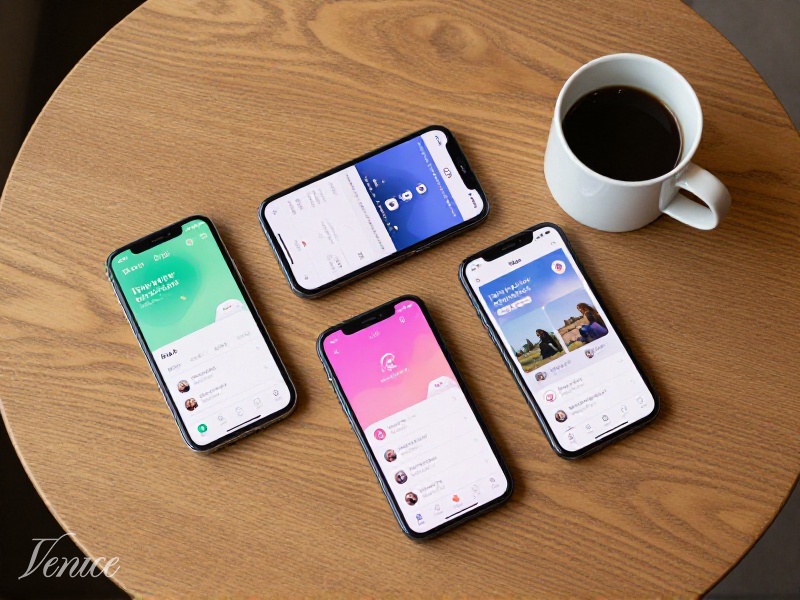
Picking the right dating app in 2026 is not a small decision. The three giants, Hinge, Tinder, and Bumble, collectively serve over 100 million users worldwide and generate billions in revenue each year. According to Match Group's 2024 annual report, the company (which owns Tinder and Hinge) reported approximately $3.4 billion in revenue, with Tinder alone contributing the largest share. Bumble Inc., a separate publicly traded company, reported around $1.05 billion in 2024 revenue according to its annual filing.
All three apps promise to help you find love, but they work very differently in practice. Tinder is built for volume. Bumble emphasizes women-first interaction. Hinge brands itself as the app "designed to be deleted" once you find your person. Which one actually delivers results depends entirely on what you are looking for and where you live. This guide cuts through the marketing and gives you honest, source-backed analysis to help you choose.
The 2026 dating app landscape
The global online dating market reached approximately $9.65 billion in 2024 according to Statista's market intelligence reports, with North America representing about 36 percent of total revenue. Three companies dominate the space: Match Group (Tinder, Hinge, OkCupid, Match.com, Plenty of Fish), Bumble Inc. (Bumble, Badoo), and a long tail of smaller apps.
According to Pew Research Center's 2023 study on online dating in America, approximately 30 percent of US adults have used a dating site or app at some point, rising to 53 percent for adults under 30. Among LGBTQ+ adults, the number is around 55 percent. The data is clear: online dating is mainstream, and choosing well matters.
Why this comparison matters more in 2026
Two trends made app choice more important than five years ago. First, app fatigue is real: a 2024 survey by Forbes Health found that around 80 percent of users feel "emotionally drained" by dating apps. Picking the wrong app wastes months of your time. Second, monetization aggression increased significantly: Tinder Platinum jumped from around $30/month to nearly $80/month in some markets between 2022 and 2024 according to public pricing data, so investing in the wrong subscription gets expensive fast.
Tinder: still the volume leader
Tinder remains the most downloaded dating app globally with approximately 320 million lifetime downloads according to Sensor Tower's 2024 State of Mobile report. Monthly active users are estimated at around 75 million globally as of 2024. Tinder's strength is sheer volume, especially in major cities where you can swipe through hundreds of profiles in a single session.
Tinder pricing 2026
- Tinder Plus: $9.99-19.99/month
- Tinder Gold: $14.99-29.99/month
- Tinder Platinum: $19.99-79.99/month
- Tinder Select (invite-only): $499/month
Prices vary significantly by region, age, and even time of year. Older users often see higher prices than younger users, a controversial practice that has triggered class-action lawsuits in California (Candelore v. Tinder, settled 2019).
Tinder demographics and intent
According to Match Group's investor disclosures, Tinder's median user age is around 26, skewing male (approximately 65/35 male/female ratio in many markets). The platform leans heavily toward casual dating and hookups, though serious relationships do happen. A 2023 survey by Stanford sociologist Michael Rosenfeld found that around 17 percent of heterosexual couples who met online met on Tinder, the highest of any single app.
Tinder strengths and weaknesses
Strengths: Largest user base means high match volume. Fast UX. Works well for users open to a wide range of outcomes.
Weaknesses: Free tier has gotten increasingly restrictive (daily swipe limits, no "see who liked you"). Heavy ads. Reputation as casual-only deters serious users. Photo-first matching can feel shallow.
Bumble: women-first model
Bumble launched in 2014 with a distinctive rule: in heterosexual matches, only women can send the first message, and they have 24 hours to do so before the match expires. The model attracted a different user base than Tinder, with approximately 50 million registered users and around 20 million monthly active users according to Bumble Inc.'s 2024 investor reports.
Bumble pricing 2026
- Bumble Boost: $14.99-24.99/month
- Bumble Premium: $24.99-39.99/month
- Bumble Premium Plus: $39.99-49.99/month
Bumble's premium tiers offer features like unlimited swipes, advanced filters, and the ability to see who liked you. The free tier is more generous than Tinder's, making Bumble a reasonable choice for users who want to try before paying.
Bumble demographics and intent
Bumble's user base skews slightly older than Tinder, with a median age around 28-32, and the gender ratio is more balanced (around 55/45 male/female in most markets according to internal data referenced in investor presentations). The women-first rule is widely credited with reducing spam and harassment, leading to a perception of higher-quality interactions.
Bumble strengths and weaknesses
Strengths: Less harassment and spam. More balanced gender ratio. BFF mode and Bizz mode add value beyond dating. Better free tier than Tinder.
The 24-hour match expiration creates urgency that some users like and others find stressful. Women-first messaging means some heterosexual matches never start because the woman did not engage.
Hinge: "designed to be deleted"
Hinge is owned by Match Group and positioned as the app for users seeking serious relationships rather than casual dating. According to Match Group's 2024 reports, Hinge revenue grew over 50 percent year-over-year, making it the fastest-growing app in the Match portfolio. User count reached approximately 28 million registered users globally.
Hinge pricing 2026
- Hinge+: $19.99-29.99/month
- HingeX: $39.99-49.99/month
Hinge's pricing is in the middle of the pack. The free tier is functional and not as aggressively limited as Tinder's free version, but premium tiers unlock more profiles per day and advanced filters.
Hinge demographics and intent
Hinge users skew toward urban professionals aged 24-34. The app is particularly popular in major US, UK, Canadian, and Australian cities. Hinge's prompt-based profiles (you answer questions like "My ideal Sunday is...") attract users who prefer text-driven attraction over pure photo swipe. According to Hinge's own annual "Dating Report," approximately 70 percent of users say they want a relationship versus casual dating.
Hinge strengths and weaknesses
Strengths: Profiles encourage real conversation. Strong reputation for serious dating. Cleaner UX than Tinder. Smaller user base but higher intent.
Weaknesses: Smaller user base in non-major cities means fewer matches outside metros. Owned by Match Group, so monetization pressure is increasing.
Honest success rate data
Dating apps publish their own success statistics, but third-party data tells a more nuanced story. According to Pew Research Center's 2023 study, approximately 10 percent of partnered adults said they met their current partner through a dating site or app. Among adults under 30, the figure rises to around 20 percent.
What "success" actually means
Success rate is hard to define because users have different goals. A 2024 survey by Forbes Health found that:
- Approximately 70 percent of dating app users said they had been on at least one in-person date from the app
- Around 31 percent said they had a long-term relationship through an app
- Approximately 13 percent said they got engaged or married to someone they met online
Stanford sociologist Michael Rosenfeld's 2019 paper "Disintermediating your friends" found that online dating has become the most common way couples meet in the US, surpassing introductions through friends in 2013. The trend has only strengthened since.
App-specific success indicators
Hinge's internal data claims that approximately 75 percent of users want a relationship. Bumble reports that approximately 1.6 billion first messages have been sent through its women-first system. Tinder claims responsibility for many international relationships due to passport mode. All three numbers are self-reported and should be taken with appropriate skepticism.
Who wins for: casual / serious / LGBTQ+ / over-40 / specific city
No app is universally best. The right choice depends on your specific situation. Here is a practical breakdown based on user data and demographic patterns.
For casual dating
Winner: Tinder. Volume of available users in most cities makes Tinder the obvious choice for casual dating. Bumble works too, but the women-first rule slows things down.
For serious relationships
Winner: Hinge. Prompts encourage real conversation. User intent skews toward relationships. Match Group's own data shows Hinge generates more long-term outcomes per user than Tinder.
For LGBTQ+ users
Mixed results. Hinge has the best LGBTQ+ features and inclusive design among the three. Tinder has more LGBTQ+ users in absolute numbers due to size. Bumble works but the women-first rule does not apply to same-sex matches, removing the platform's unique feature.
For users over 40
Winner: Bumble or Hinge. Tinder's age skew is too young for most over-40 users. Bumble and Hinge both have meaningful 35-50 demographics. Match.com (also owned by Match Group) and OkCupid are also reasonable alternatives outside the big-3.
For specific cities
App popularity varies dramatically by city. Hinge dominates New York, Los Angeles, London, and Sydney. Bumble is stronger in Austin, Nashville, and parts of the US South. Tinder dominates in college towns and most international cities.
Pricing comparison table
The following table summarizes 2026 pricing for the big three. All prices are approximate US-based monthly costs and vary by region, age, and promotion.
| App | Free tier | Mid tier | Top tier | Best value |
|---|---|---|---|---|
| Tinder | Heavily limited | Gold $14.99-29.99 | Platinum $19.99-79.99 | Gold for volume seekers |
| Bumble | Reasonable | Premium $24.99-39.99 | Premium+ $39.99-49.99 | Boost for casual use |
| Hinge | Functional | Hinge+ $19.99-29.99 | HingeX $39.99-49.99 | Free tier often enough |
Annual subscription discounts
All three apps offer annual subscriptions at roughly 30-50 percent discounts compared to monthly pricing. For example, Tinder Gold annual is often around $99 vs $179 monthly equivalent. If you are committed to dating for 6+ months, annual subscriptions make financial sense.
Underrated alternatives: niche dating apps and Telegram bots like DateWiz
The big three are not the only option. Several niche alternatives serve specific demographics or use cases better. According to Statista 2024, niche dating apps collectively account for around 20 percent of the dating app market by user count, despite getting less media attention.
Niche apps worth considering
- OkCupid: Personality-driven matching, strong LGBTQ+ inclusivity, ad-supported free tier
- Coffee Meets Bagel: Curated matches, less swipe fatigue
- The League: Premium positioning for professionals, smaller user base
- Grindr: Dominant in gay male dating
- Lex: Text-based dating for LGBTQ+ users, especially queer women
- Feeld: Open relationships and non-traditional structures
Telegram dating bots: a different category
An emerging category that does not get much US media coverage is Telegram dating bots. Telegram crossed 1 billion monthly active users in 2025 according to official Telegram data, and dating bots within the platform serve niche audiences globally. Bots like DateWiz offer fully free dating with manual photo moderation, hidden phone numbers, and multi-language support across 8 languages.
These bots will not replace Hinge for someone in Manhattan looking for a serious relationship. The user base is too small in major Western cities. But for users in emerging markets, users who prioritize privacy, or users who simply do not want another subscription, a verified Telegram bot is a legitimate alternative worth knowing about. If none of the big three work for you, exploring this category costs nothing to try.