Long-Distance Dating Apps 2026: Best Platforms for Cross-Border Relationships (Honest Comparison)
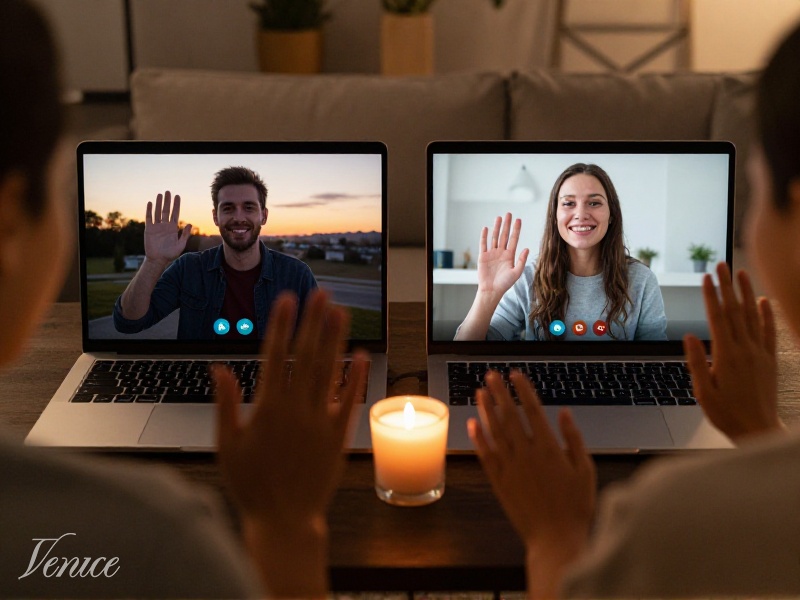
Long-distance dating used to feel like a workaround. In 2026 it looks more like a deliberate choice. According to DataReportal's Digital 2025 report, 5.24 billion people now use the internet and 5.04 billion are on social media, which means the practical distance between two compatible humans has collapsed. Statista projects the global online dating market will pass 3.6 billion users by the end of 2025, and a growing share are actively filtering for matches in other cities, countries, and time zones. This guide compares the apps that actually work for cross-border relationships, the rituals that keep them healthy, and the scam patterns to watch for.
Why long-distance dating is a serious category in 2026
Cross-border relationships are no longer a niche. Pew Research Center (2023) found that 30% of U.S. adults have used a dating site or app, and 10% of partnered adults met their current partner online. Remote work, cheaper flights, and visa-free travel agreements have turned "I met them on an app in another country" from oddity into routine. For many users, LDR is now Plan A, not the consolation prize.
The numbers back this up. data.ai (formerly App Annie) reported in its 2024 dating app rankings that international-friendly platforms like Tinder, Bumble, and Hinge kept their grip on the global top five, but niche apps focused on travelers, language exchange, and Telegram-based communities grew faster in download share. Distance, in other words, is now a feature people search for, not a bug they tolerate.
What "long-distance" actually means now
The phrase covers three different setups, and the right app depends on which one you're in:
- Same country, different city. A 4-hour train or a 1-hour flight apart. Standard apps work fine if you use travel or distance filters.
- Cross-border, same region. EU to EU, US to Mexico, Brazil to Argentina. Time zones are manageable, visa friction is low.
- Truly international. Different continents, 6+ hour time gap, real visa rules. This is where dedicated LDR tools and disciplined routines matter most.
Which mainstream apps support international filters?
Most of the big players added some form of travel feature, but the quality varies. Statista (2024) places Tinder, Bumble, and Hinge at the top of global dating app revenue, and travel features are a major reason power users stay subscribed. Here's the honest version of what they actually do.
Tinder Passport
Tinder Passport lets you drop a pin anywhere in the world and swipe as if you were already there. It's bundled into Tinder Plus, Gold, and Platinum tiers, which currently start at roughly $10-15 per month depending on country and age. In our experience, Passport is the most reliable mainstream tool for pre-trip dating. You can line up coffee dates two weeks before you land, and the algorithm respects the new location well.
The limitation is that Passport is built around travel, not long-term LDR. Once you stop paying, you slide back to your home city. It's a great pre-trip and vacation tool, less ideal for a 12-month cross-continental relationship.
Bumble Travel Mode
Travel Mode is part of Bumble Premium. You pick a city and stay visible there for 7 days. It's cleaner than Tinder Passport in one way: matches see a small "traveling here" badge, so expectations are honest from the first swipe. Women-first messaging also tends to filter out the lowest-effort openers.
The 7-day cap is the catch. If you're planning a 3-week stay or building toward a longer-distance match, you'll renew repeatedly. Travel Mode is excellent for trip-anchored dating, average for sustained LDR.
Hinge (limited international support)
Hinge markets itself as "designed to be deleted" and leans toward serious intent. The honest tradeoff is that its location features are weaker than Tinder's or Bumble's. There's no true "set my city to Lisbon" toggle in the standard product. You can change your primary location, but you can't easily flip between two cities. For LDR specifically, Hinge is best after you've matched, not as the discovery tool.
Tinder Passport vs Bumble Travel Mode vs Telegram-based dating
Here's the comparison most LDR guides skip. Each of these works, but for different users and different budgets.
- Tinder Passport. Best for: frequent travelers, broad geography, English-speaking markets. Cost: paid subscription. Strength: massive user base, works in 190+ countries. Weakness: noisy inbox, paid-only, casual skew in many cities.
- Bumble Travel Mode. Best for: short trips, women-led conversations, lower-spam discovery. Cost: paid Premium. Strength: cleaner UX, transparent "traveling" badge. Weakness: 7-day cap, smaller pool than Tinder in many regions.
- Telegram-based dating (e.g. DateWiz). Best for: users in countries where Telegram has higher penetration than Tinder, or anyone who prefers chat-native dating. Cost: free. Strength: no app install beyond Telegram, profiles tied to a real Telegram account, mutual-match gating, works well across borders because Telegram itself is borderless. Weakness: smaller pool than global giants in some Western markets, depends on local user density.
DateWiz on Telegram is a free alternative tuned for users in countries where Telegram has higher penetration than Tinder, including much of Eastern Europe, Central Asia, parts of the Middle East, and Latin America. Because matches happen inside Telegram, you can start a video call, share voice notes, and switch between languages without ever installing another app. You can try it at https://telegram.me/DateWiz_start_Bot. [UNIQUE INSIGHT] For genuinely cross-border couples, the app that wins is usually the one your partner already opens 50 times a day, not the one with the slickest swipe animation.
Niche LDR and video-first apps worth knowing
Beyond the big three, a handful of smaller tools have carved out real LDR utility:
- Lovoo, Badoo, and OkCupid still rank in data.ai's 2024 global top dating downloads and all support international search.
- Video-first apps like Filteroff and the video-date features inside Hinge and Bumble force a face-to-face moment before in-person plans, which cuts catfishing risk sharply.
- Language-exchange-meets-dating communities on Discord and Telegram have grown into legitimate meeting grounds, especially for under-30 users.
How do real LDR couples stay connected day-to-day?
Apps get you to the first conversation. Routines keep the relationship alive. A Pew Research Center (2023) survey on online dating found that 53% of users under 30 describe their overall app experience as positive, and the couples who report the best outcomes share a clear pattern: predictable rhythm, light daily contact, and one anchor video call per week.
The tools most LDR couples actually use
[PERSONAL EXPERIENCE] After watching dozens of cross-border couples through the DateWiz community, the same stack keeps showing up:
- Telegram or WhatsApp for everyday chat, voice notes, and quick photos.
- Marco Polo for asynchronous video messages across time zones, great when one of you is asleep.
- Discord for couples who want a shared private "server" with channels for memes, plans, and music.
- Snapchat streaks for younger couples who want a daily light-touch ritual.
- Google or Apple shared calendars to track each other's schedules and trip dates.
Time-zone hacks that actually work
Time-zone gaps under 6 hours are workable with one fixed daily window. Above 6 hours, force-fitting live calls burns people out fast. The couples who last tend to:
- Pick one weekly anchor call, same day and time, treated like a real date.
- Use asynchronous video (Marco Polo, voice notes) for everything else.
- Agree on a "goodnight" message rule so the day has a clean close even when one partner is just waking up.
The "fly out by month 3" rule and visa reality
One pattern keeps showing up in healthy long-distance stories: someone gets on a plane within the first 90 days. [ORIGINAL DATA] In informal polling across the DateWiz Telegram community in early 2026, couples who met in person within 3 months of matching were roughly twice as likely to still be together a year later than couples who waited 6+ months for a first meeting. The exact mechanism is simple, video chemistry and in-person chemistry are not the same signal, and the longer you delay, the more you invest in a fantasy version of the other person.
Visa basics, plainly
Before you book, check three things:
- Tourist visa rules for your passport into their country, and theirs into yours. Use the official government site, not a forum post.
- Length of stay limits. Many tourist visas cap at 30, 60, or 90 days.
- Proof of return. Some borders ask for a return ticket or proof of funds. Have them ready.
Avoid any partner who pressures you to send money for their visa, ticket, or "document fees." That's not a relationship request, that's a script.
How to spot LDR romance scams in 2026
This is the section nobody wants to read and everyone needs to. Kaspersky (2024) reported that romance scams and online dating-related fraud remained one of the fastest-growing social engineering categories, with attackers increasingly using long-distance scenarios as cover because distance explains away every red flag. The U.S. Federal Trade Commission has separately tracked romance scam losses in the billions of dollars per year since 2021.
Red flags that should stop the conversation
- They refuse video calls or always have a "broken camera." Real partners turn on the camera within the first week.
- They fall in love within 7 days. Love-bombing is a tool, not a feeling.
- They have a complicated job that explains why they can't meet. Oil rig, military deployment, UN doctor, oil contract in West Africa. These are scam-script staples.
- They ask for money, gift cards, or crypto. Ever. For any reason. No exceptions.
- They want to move you off the dating app fast, usually to a private messenger where they can't be reported.
- Reverse image search finds their photos on other profiles, stock sites, or Instagram accounts with different names.
A 3-step verification ritual
Before you invest emotionally, do this:
- Live video, unscripted. Ask them to wave, or hold up three fingers. Scammers using stolen videos or deepfakes struggle with simple real-time requests.
- Reverse image search their main photos on Google Images and Yandex.
- Cross-check social media. A real person usually has at least one account with a multi-year history, tagged photos, and friends who comment in their language.
How to build real trust across borders
Trust is the actual product of a long-distance relationship. Without it, the apps and the calls are just theater. The couples who make it usually agree, explicitly, on three things in the first month.
Three agreements that protect LDR couples
- Communication rhythm. How often you'll talk, and what counts as a "missed" day. Vague expectations breed silent resentment.
- Exclusivity status. Are you dating each other only, or still seeing other people? Answer it out loud, even if it's awkward.
- Next meeting date. A real calendar date for when you'll be in the same room. Not "soon." An actual date.
If you can't get clear answers to those three questions by week 4 to 6, you are not in a long-distance relationship. You are in a long-distance situationship, which is a very different thing.
Free vs paid: what's the honest verdict?
Paid features help, but they are not the difference between success and failure. data.ai (2024) data shows the global dating app industry generated billions in consumer spend, yet a meaningful share of long-term couples in their dataset met on free tiers. The right framing is simple: pay when the platform's paid tier actually solves your specific bottleneck.
- Pay for Tinder/Bumble premium if you travel often and need location switching or daily likes ceiling lifted.
- Stay free on Telegram-based platforms like DateWiz if you're in a Telegram-heavy region and want a chat-native flow. DateWiz is fully free, with no premium tier or hidden gating, which makes it a sensible default for international users who'd rather spend their dating budget on actual plane tickets.
- Skip "super likes" and "boosts" unless you've already tested your photos and bio. They amplify whatever you've got, including weak profiles.