Why Am I Not Getting Matches on Dating Apps? A Full 2026 Diagnosis
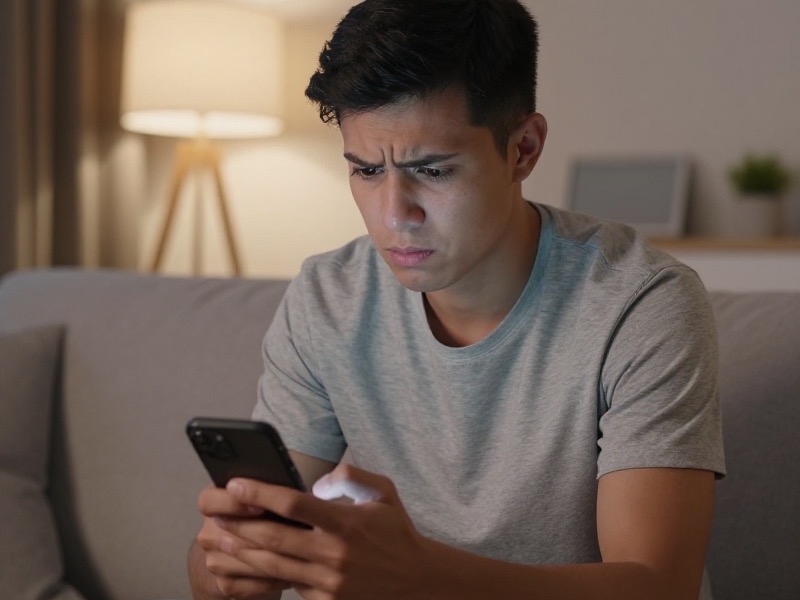
Why are you not getting matches when your profile is fine?
Because in nearly every case the problem is distribution, not content. If your photos are clear and your bio is written, the bottleneck is almost always that too few people are being shown your profile at all. Pew Research Center reported in 2023 that roughly three in ten U.S. adults have used a dating app, and that a large share describe the experience as frustrating. Much of that frustration comes from a stage nobody can see: who the app decides to show you to.
This is a diagnosis, not a profile rewrite. Work through the seven checks below in order, because they are sorted from cheapest to most disruptive. Most people find their answer in the first three, and most people never get that far, because they jump straight to changing photos.
Before you start: measure your baseline
You cannot diagnose anything without a number. For one week, record three figures daily: profiles you liked, matches you received, and messages you sent that got a reply. Everything below is judged against that baseline. Skip this step and every fix afterwards is guesswork.
Check 1: Is your profile actually being distributed?
Ranking decides who ever sees you, and it runs before any of your content matters. Every major platform sorts a huge pool into a queue because it has to. Statista's 2025 data puts the global online dating audience in the hundreds of millions, so no app can show everyone to everyone. Your reach is a variable the system sets, and it moves constantly.
The new-account boost and what happens when it ends
Fresh accounts get shown to far more people for a short window while the system gathers data on you. This is well documented and it is temporary. The pattern is familiar: two excellent days, then a cliff. That cliff is not your profile getting worse. It is the boost expiring and your real ranking taking over.
Why inactivity quietly kills your reach
Recency is now the strongest ranking signal on most apps. Tinder said publicly in 2019 that it had moved away from a single desirability score toward prioritising recent activity, and much of the industry followed. If you have not opened the app in two weeks, the system assumes you will not reply and stops spending impressions on you. Reopening after a long gap does not instantly restore your old reach either. It usually takes several days of short, consistent sessions.
Check 2: Does the population maths in your area even work?
Sometimes the honest answer is that there are forty eligible people inside your radius, and no bio fixes that. This is the check people resist most, and it explains more hopeless cases than any other. DataReportal's Digital 2025 report shows enormous global mobile adoption, but adoption is not evenly spread, and dating app density differs wildly between a capital city and a town of thirty thousand.
Run the numbers on your own radius
Do the rough calculation yourself. Take your town's population, cut it to the share in your age bracket, halve it for gender, then take the fraction actively using your app in a given month. In a small town that can land in the low hundreds, and once you have swiped through them over three months, the queue genuinely runs dry. The symptom is unmistakable: the same faces reappear, or the app tells you there is nobody new nearby.
What to do when the pool is simply too small
You have three levers and only three. Widen your distance radius, which is free and instant. Widen your age range, which most people keep unrealistically tight. Or move to a platform where the pool is not capped by geography in the same way. None of these are profile problems, which is precisely why profile advice never fixes them.
Check 3: Are filters hiding you from people who would say yes?
Filters cut both ways, and the second direction is completely invisible to you. Yours decide who enters your queue. Theirs decide whether you enter anyone else's, and you never get feedback that a filter excluded you. Someone can find you genuinely appealing and never see your profile because their distance setting is ten kilometres and you are fourteen away.
Your filters, tightened without noticing
Most people set filters once and forget them for years. A 28 to 34 age band with a fifteen kilometre radius in a mid-sized city can cut your entire pool by eighty percent or more. Run this test: widen your age range by five years each way and double your distance for one week, change nothing else, then compare against your baseline. If the numbers jump, filters were your answer.
Their filters, which you cannot see
You cannot control other people's settings, but you can control the fields they filter on. Height, age and distance are the three most commonly used numeric filters. If you leave height blank on an app that supports filtering by it, you may be excluded from results by default rather than included. Completing every filterable field is not profile writing. It is making yourself eligible for queries.
Check 4: What does your thumbnail communicate in half a second?
This is a mechanics question, not a photo-quality question. Your first photo is rarely viewed as the full-screen image you uploaded. In a grid or a queue it is a small, cropped, often square thumbnail seen for well under a second. A beautiful wide landscape shot with you standing twenty metres away is a great photograph and a terrible thumbnail.
Three thumbnail failures that have nothing to do with looks
- The crop cuts your face. Apps crop to a different aspect ratio than your camera roll. Check what your lead photo looks like at thumbnail size before assuming it works.
- Group shots create ambiguity. If a viewer has to work out which person you are, they have already moved on. Ambiguity costs you the decision, not the impression.
- Low contrast disappears. Dark clothing against a dark background, or a distant figure in bright sun, becomes a grey smudge at 120 pixels wide.
The diagnostic version is easy. Screenshot your own profile, shrink it to the size of a postage stamp, and look at it for one second. Whatever you can still identify is what a stranger actually receives.
Check 5: Is your own swiping behaviour training a bad score?
How you swipe is an input the system reads, not a private choice. data.ai, formerly App Annie, reported in 2024 that dating apps sit among the highest-engagement mobile categories, and platforms study swipe patterns closely to filter out low-quality behaviour. Right-swiping everything is the classic self-inflicted wound.
Why mass-liking backfires
When you like everyone, your like carries no information. The system learns nothing about your preferences, so it cannot target your queue, and your approval gets weighted down because it predicts nothing. You also collect matches you were never going to message. Dead matches look, from the algorithm's side, like someone who cannot convert matches into conversations.
Burst swiping looks automated
Three hundred swipes in eleven minutes resembles a script more than a person. Most platforms run rate limits and spam detection, and tripping them can quietly reduce your reach for days. Short, regular sessions with real consideration outperform marathon sessions every time, and they produce better decisions as a side effect.
Check 6: Is your account healthy?
Some accounts are shown to almost nobody for reasons unrelated to attractiveness. Reports, blocks and rapid unmatches feed moderation systems, and a pattern of them can lead to shadow-limiting, where your profile still exists but barely circulates. You are rarely told this has happened, which is what makes it so hard to diagnose from the inside.
The four account-health signals worth checking
| Signal | What to check |
|---|---|
| Photo verification | Unverified profiles are down-weighted or hidden from filtered searches on several apps. |
| Profile completeness | Blank fields reduce how many queries you appear in. Bumble has said completeness affects reach. |
| Report history | Repeated reports or fast unmatches after matching can suppress how widely you are distributed. |
| Account age and reuse | A recycled old account can carry its previous low ranking straight back with it. |
Kaspersky's 2024 research on dating platform safety makes a related point worth remembering. Aggressive, spam-shaped outreach is exactly what moderation systems are built to catch, so a copy-pasted opener sent to fifty people is a reach problem as well as an etiquette one.
Check 7: Are you on the wrong app for your goal?
An app can work perfectly and still be wrong for you. Hinge's published work through 2024, built around a Gale-Shapley style stable matching approach and prompt-based preferences, is designed for people seeking relationships. A rapid swipe interface optimises for different behaviour entirely. When your goal and the platform's design point in different directions, you feel invisible even with healthy distribution.
Signs of a mismatch
Watch for three. You get matches but conversations die within two messages. Your age bracket is visibly thin on that specific app in your country. Or the regional user base is small: Ofcom's 2024 Online Nation research shows how concentrated everyday communication has become inside a handful of messaging platforms, and plenty of dating apps have no meaningful presence outside a few large cities.
The free alternative that removes the ranking layer
Worth knowing: not every platform ranks you at all. Telegram-based dating removes the distribution layer causing most of the problems above, because no popularity score decides who sees your profile. A free bot such as DateWiz shows profiles and opens a chat only when both people have said yes, so your reach is not something an algorithm quietly rations. If checks 1, 2 and 6 all came back suspicious, running a no-ranking option alongside your main app is the fastest way to learn whether the app itself was the problem.
How do you test each hypothesis without fooling yourself?
Change one variable, wait a full week, then compare against your baseline. That single rule separates a diagnosis from flailing. Most people change five things at once on a Sunday night, see a bump on Monday, and learn nothing, because the bump could have come from any of the five or simply from the day of the week.
The one-variable, one-week protocol
- Week 1: baseline. Change nothing. Record likes given, matches received and replies received.
- Week 2: filters. Widen distance and age. Nothing else changes.
- Week 3: lead photo. Swap the first photo only, leaving filters where week two left them.
- Week 4: swipe discipline. Like only profiles you would genuinely message, across two short daily sessions.
Four weeks feels slow. It is still far faster than six months of random edits that never told you anything. A week is also the minimum honest window, because match volume swings heavily by day, and weekday evenings behave nothing like Sunday nights.
What does a normal match rate actually look like?
You need a benchmark, or you cannot tell broken from ordinary. Published app research and repeated independent surveys point the same way: match rates skew heavily by gender and vary enormously by market. A low single-digit percentage of likes turning into matches is unremarkable for many men, while women often see far higher match rates alongside much weaker conversion from match to real conversation.
The practical version. If you give one hundred considered likes a week and get a handful of matches, you are inside normal range and your problem is conversion, not distribution. If you give one hundred considered likes a week and get zero matches for three consecutive weeks, something structural is wrong, and it is almost certainly check 1, 2 or 6.
Should you reset your account or just wait?
Wait first. A reset costs you your account history, your existing matches and sometimes your paid subscription, and it only helps in a narrow set of cases. Give a genuine seven-day activity streak a chance before doing anything drastic, because reach recovers gradually rather than instantly.
Reset only when two things are both true: you have run the one-variable protocol for at least three weeks with no movement, and you suspect account-level suppression from an old report history. Otherwise you are discarding the data that makes you rankable and restarting the boost cycle on a profile carrying the same underlying fault. Fix the diagnosis first, then decide.